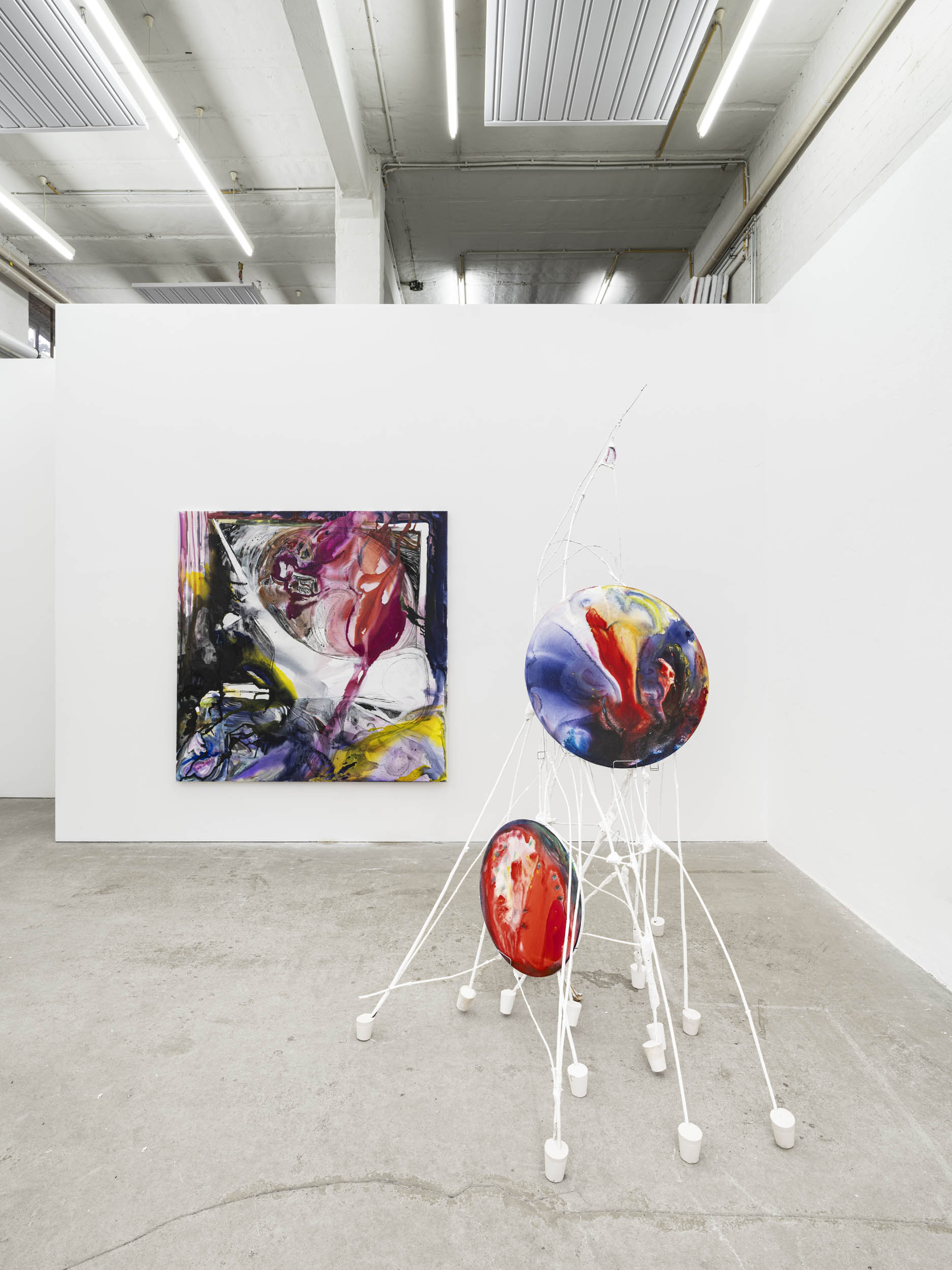
Installation view: Sophie Schmidt, ‘Tyrannei der Hoffnung’, September 5 — October 24, 2026, Galerie Tobias Naehring, Leipzig
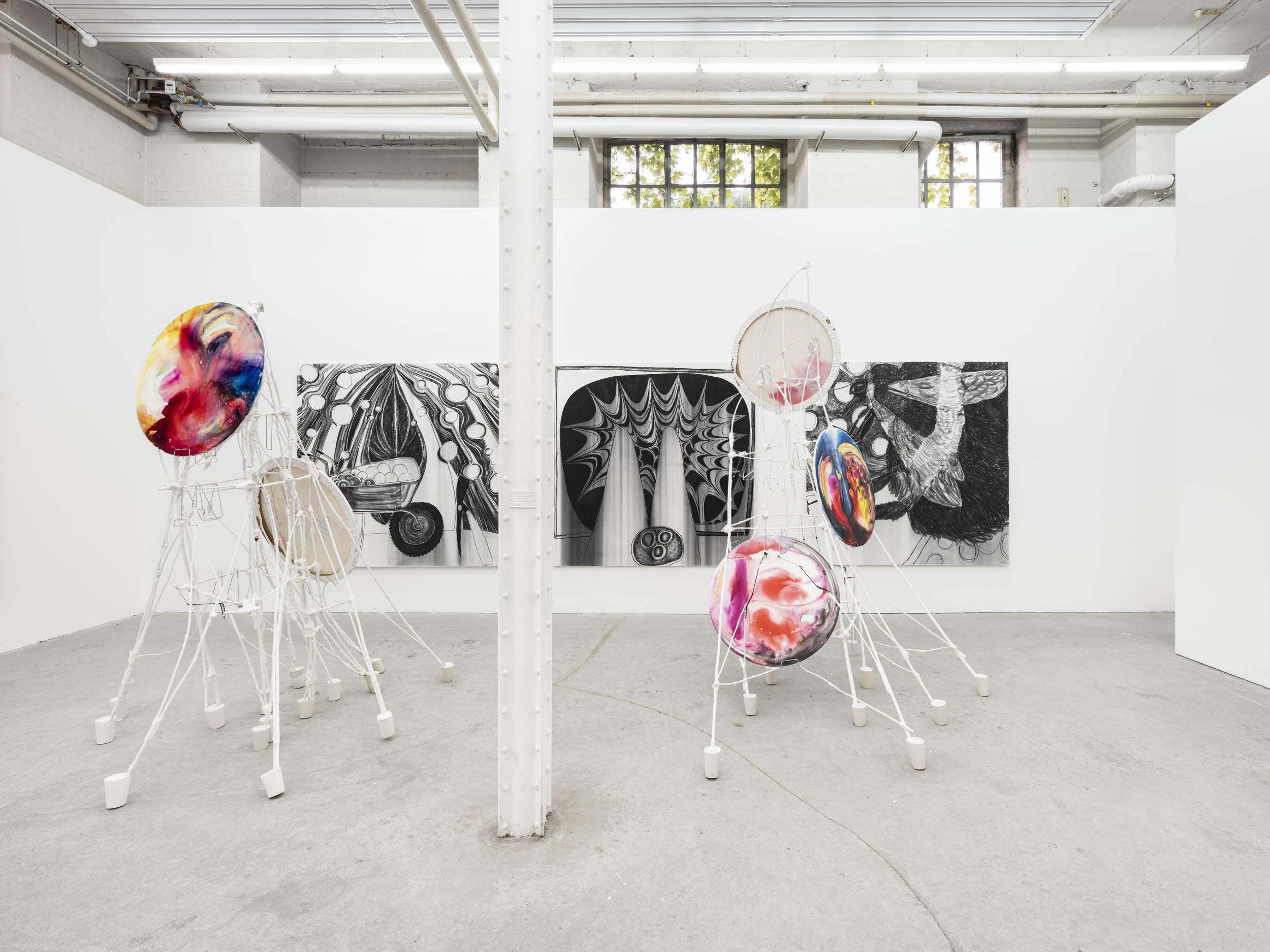
Installation view: Sophie Schmidt, ‘Tyrannei der Hoffnung’, September 5 — October 24, 2026, Galerie Tobias Naehring, Leipzig
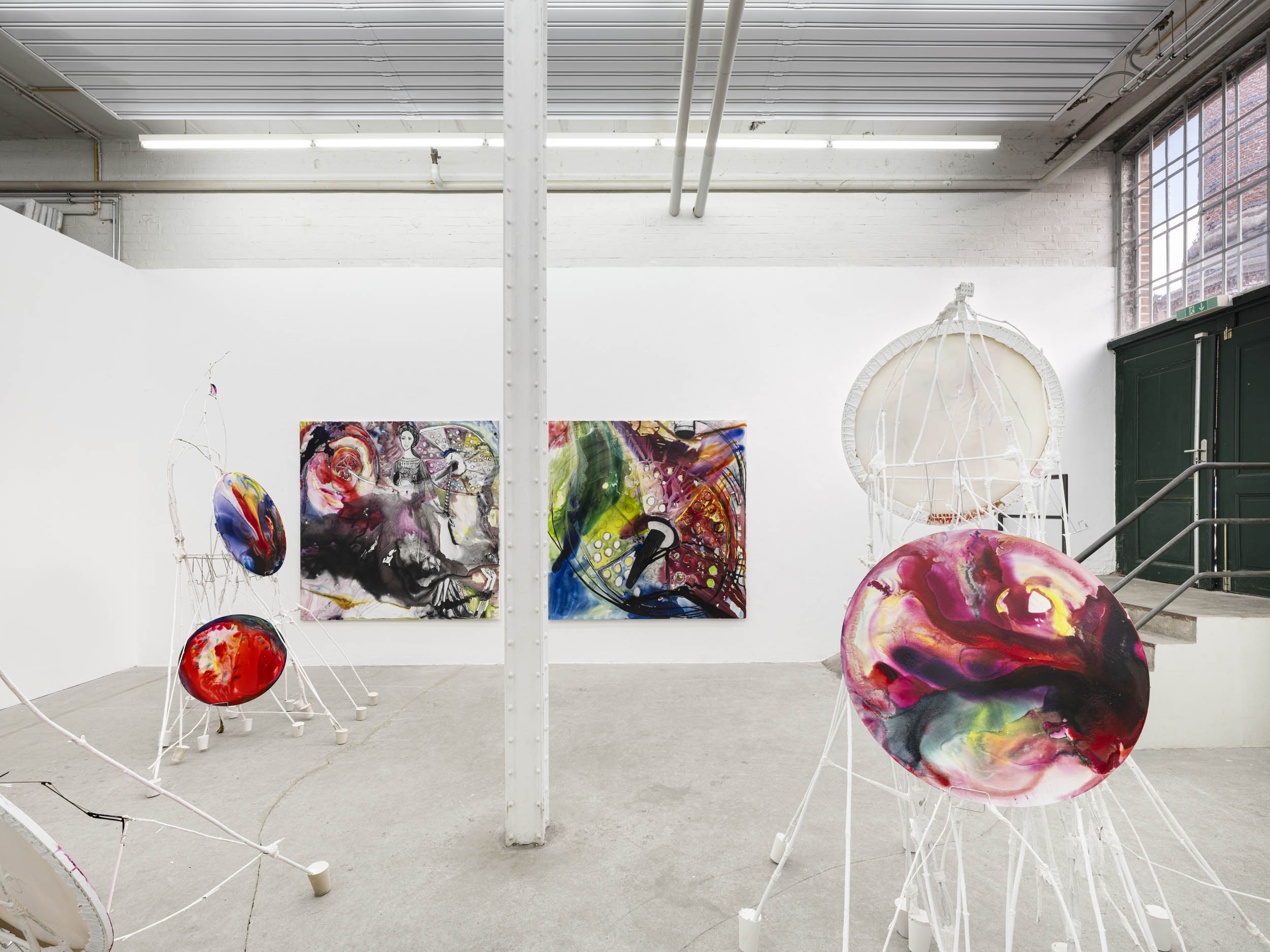
Installation view: Sophie Schmidt, ‘Tyrannei der Hoffnung’, September 5 — October 24, 2026, Galerie Tobias Naehring, Leipzig
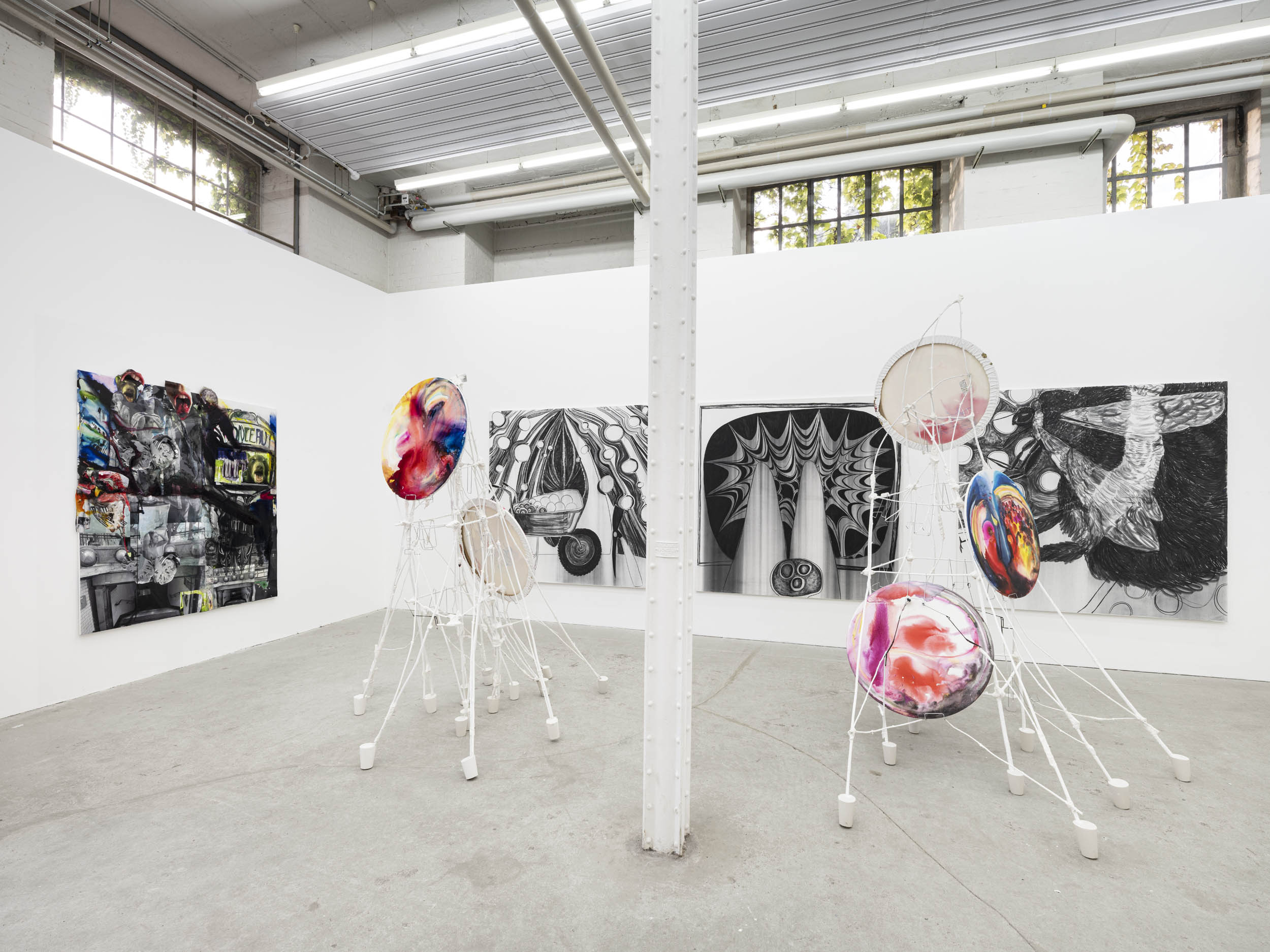
Installation view: Sophie Schmidt, ‘Tyrannei der Hoffnung’, September 5 — October 24, 2026, Galerie Tobias Naehring, Leipzig
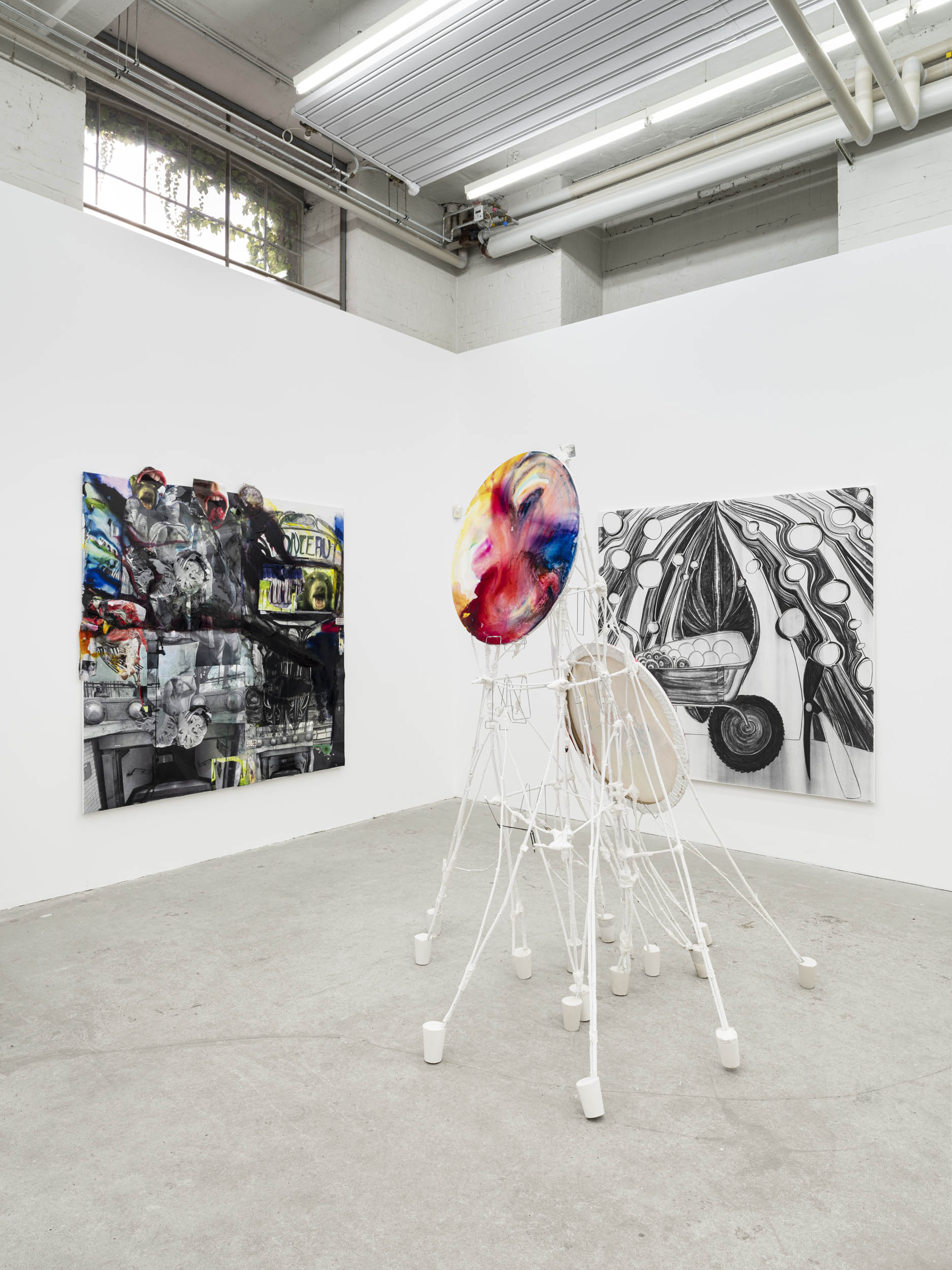
Installation view: Sophie Schmidt, ‘Tyrannei der Hoffnung’, September 5 — October 24, 2026, Galerie Tobias Naehring, Leipzig
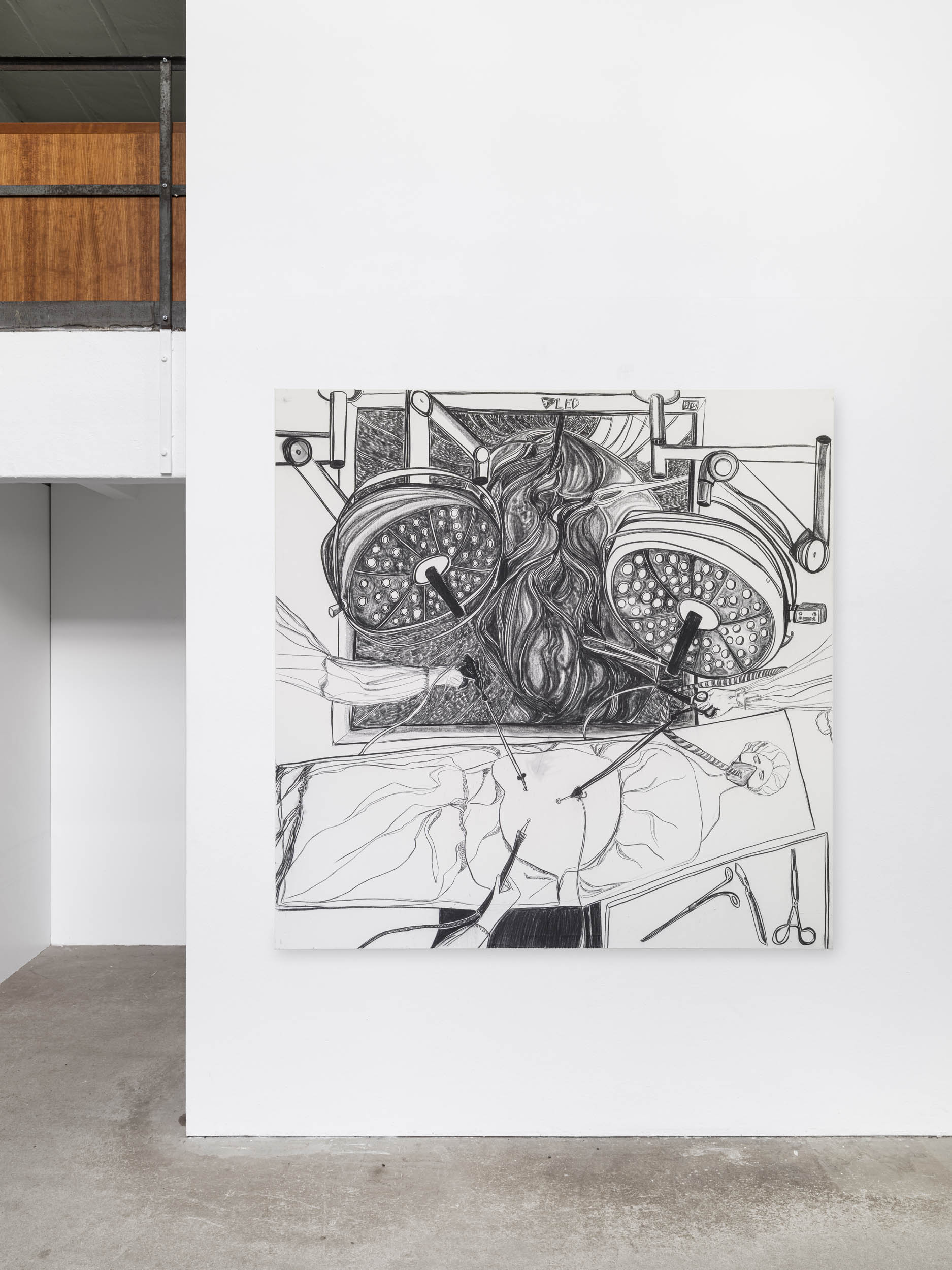
Installation view: Sophie Schmidt, ‘Tyrannei der Hoffnung’, September 5 — October 24, 2026, Galerie Tobias Naehring, Leipzig
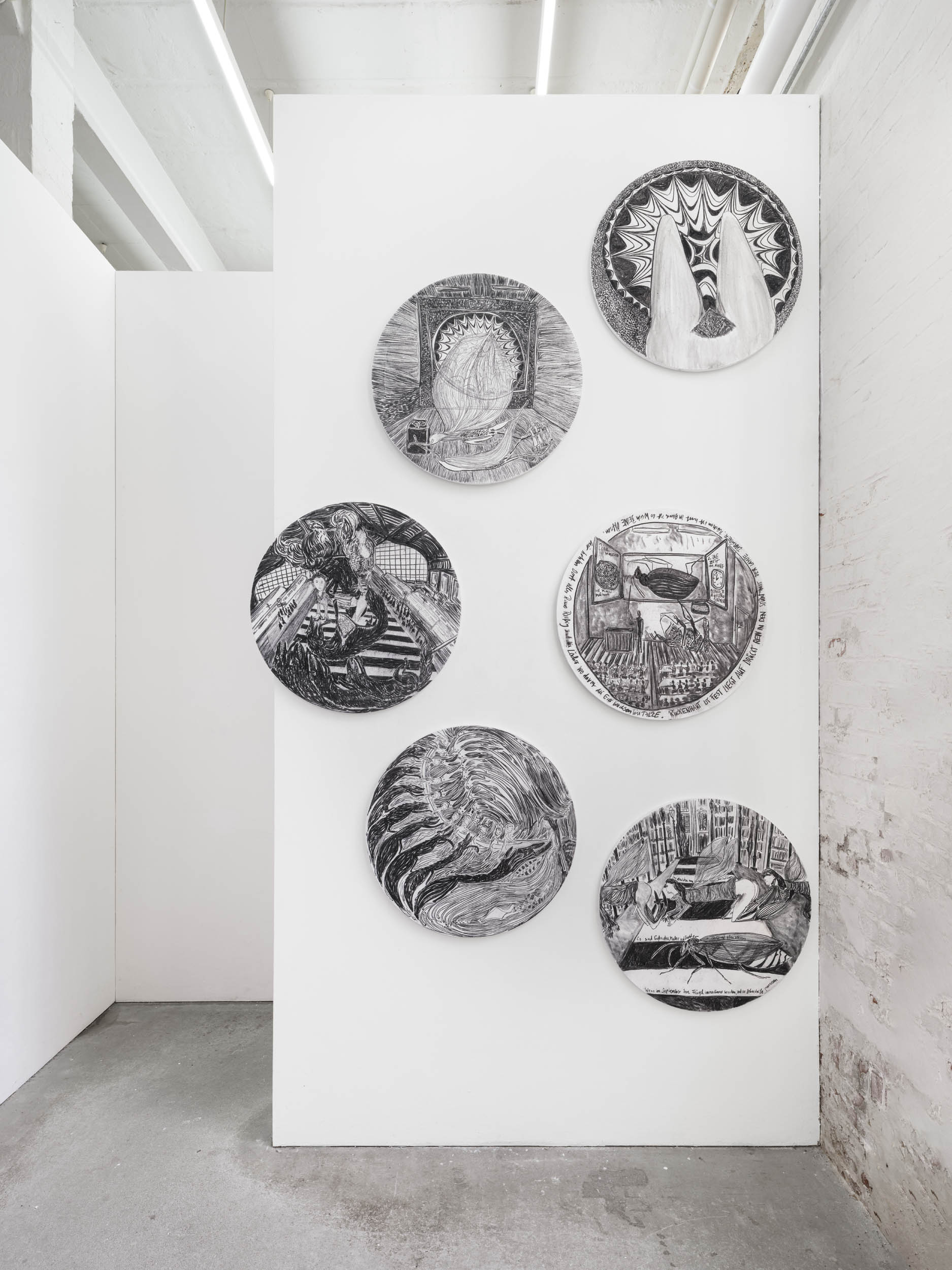
Installation view: Sophie Schmidt, ‘Tyrannei der Hoffnung’, September 5 — October 24, 2026, Galerie Tobias Naehring, Leipzig
Sophie Schmidt: Tyranny of Hope
Laura König
Tyranny of Hope is an engagement with bodies. Sophie Schmidt’s works depict bodies in pain and in states of transformation, bleeding, subjected and exposed to examination and evaluation. At the same time, they are sensual and curious, openly projecting desire outward. These bodies become sites where social debates around health and functionality are negotiated, particularly when questions of motherhood and female sexuality are at stake.
With the exhibition’s title, Schmidt refers to aspects of the desire to have children and to reproductive medicine, domains in which hope is demanded: Do not give up! Stay positive! Think about the future! Combined with medical terminology and diagnoses, such imperatives produce a social pressure to optimize the body and everyday life. This pressure culminates in the fact that health insurance providers subsidize fertility treatment only for married couples within a specific age range.
Schmidt negotiates the ambivalence of doubt, fear, anger, and curiosity as disruptive forces within these romanticized discourses. In the essay In bocca al lupo – Das Wolfsmaul in mir, Schmidt writes: “When the doctor penetrates me with the ultrasound device, she does so more tenderly and cautiously than many men do with their penises.” Contradiction and loss of control give rise to a feminist approach. Failure and desire, refusal and curiosity are interwoven in their ambivalence in order to challenge social and political expectations.
In Endometriose-OP mit großem Screen, the endometriotic tissue occupies most of the pictorial space through its representation on the screen. Making the interior of the body visible renders it medically legible, but also estranges it. Schmidt makes use of this estrangement: by appropriating medical images that categorize the body as diseased or as deviating from the norm, a transformation takes place. When the body lies on its back in the gynecological chair in Operation beim Frauenarzt, it is not far removed from the beetle in Kunstunterricht in Cham. Within the vulnerability of these poses, powerlessness and self-empowerment are closely intertwined. Such appropriation and transposition of traditionally negatively connoted images of insects, wolves, illness, and loss opens up a space of possibility—one in which expectations can be escaped and disappointed.
In works on paper such as Endometriose OP mit Screens und der Nordrosette von Notre Dame and Endometriose-OP mit OP-Werkzeug, Chicoree, OP-Rosette und der Dame à la licorne du Cluny, Schmidt connects the opened body in the operating room with images and impressions from Paris. The body refuses binary categorization—sick/healthy, man/woman, animal/human—on the basis of medical findings and expands until it has incorporated art and architecture, flora and fauna. Every experience leaves it transformed.
At the same time, the openings of the figures encompass an abundance of forms, colors, desires, and relationships. The transforming bodies press against the edges of the image or grow beyond them.
The unicorn is among the Parisian impressions Schmidt has brought onto canvas. Frau mit Einhorn von Cluny, OP-Lampe und Plazenta and Licorne refer to Late Gothic tapestries. In fairy tales, religious narratives, and fantasy novels, the unicorn appears variously as an aggressive monster, a seductive outsider, or an innocent bringer of salvation. Surrealist women artists such as Leonora Carrington and Jane Graverol recognized the productive potential of this constellation of opposites, using the mythical creature to address the contradictory expectations placed on women and female desire.
The paintings are overwhelming, partly because of their scale, but above all because of the abundance of their contents. This includes, not least, their materiality. The expansive fields of color do not merely flood the canvases; they also overwhelm the senses. In Schmidt’s painting process, control is partially relinquished to colors that flow unpredictably under the force of gravity, producing open forms that generate new connections between the figures, as well as between the image and the viewer. Within the areas covered with UV varnish, reflections of the surrounding space emerge, while other surfaces remain rough. The sensory experience of the paintings shifts from one work to the next.
The tondos ultimately extend the paintings into space. Here, surgical lamps and rose windows undergo a final stage of abstraction. Supported by fragile structures made of white branches, the works are at once tangible and inaccessible, almost alien. Schmidt also activates these structures performatively as extensions of the body. In performance and in dialogue with the wall paintings, fragile, insectoid cyborg bodies emerge—bodies that do not optimize the body but instead often slow it down, complicate it, and resist the imperative of progress. In their function as extensions, they interrogate the ambivalence of the body itself and the possibilities of its coexistence within space.
The Tyranny of Hope points to the ambivalent nature of hope, which becomes particularly problematic when hope is turned into an obligation. Hope for health, happiness, and success is cruel as long as we define these things in singular terms and use them to determine who is entitled to participate in society. If growth and progress are the only paths to success, refusing the obligation to hope is, not least, a political act—one that raises the question: What happens when we reject hope?